

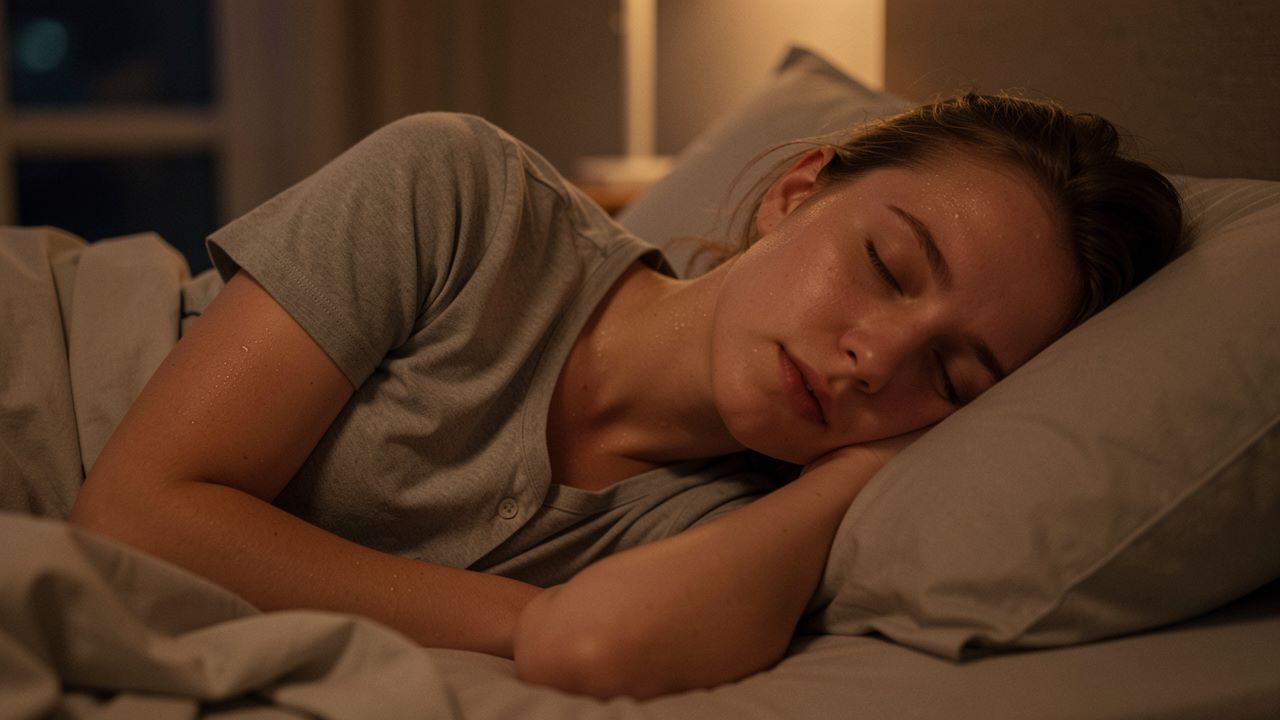
Night sweats are something many people experience without realizing how much they affect sleep quality. Some nights, you don’t suddenly wake up. You’ve been asleep for hours, yet you still feel like you didn’t rest at all. That’s because your body never really settled down. Tossing and turning, kicking off the blanket and pulling it back again… it’s a familiar pattern for anyone who overheats at night. And for many of us, night sweats are to blame.
✻ This page may contain affiliate links. If you purchase through these links, we may earn a commission at no extra cost to you. This helps support the site and allows us to continue sharing helpful content and recommendations.
How Common Are Night Sweats?
Night sweating happens more often than we think. Sometimes, it’s simply the environment: the room is a bit too warm, the blanket is a little heavy, the air doesn’t move well, or your pajamas aren’t quite comfortable enough. Other times, it’s just how your body works. Some people naturally sweat more at night. Maybe it’s your metabolism, your body type, or the way your system regulates temperature.
And let’s be honest, that sticky, damp feeling is really uncomfortable. Pajamas clinging to your skin, feeling heavy, humid, and stifling can make it hard to relax. Over time, it can even affect your skin, making it more sensitive or prone to rashes. Long‑term night sweating can slowly chip away at your sleep quality.
How to Stay Comfortable Despite Night Sweats
The good news is that night sweats aren’t as scary as they sound. Once you understand why they happen, you can usually do something about them. If the cause is environmental, the fix is simple: adjust the room temperature, swap blankets, or improve ventilation.
But if the issue is your body or your pajamas, the easiest and most effective solution is choosing the right sleepwear fabric. This is where many people overlook something important: moisture management.
Why Moisture Management Matters for Sleep
Most people think sleepwear is just about being absorbent or breathable. And yes, those qualities matter, but they’re only part of the story. What really determines your comfort is how quickly the fabric allows sweat to evaporate. Good sleepwear keeps your skin dry and comfortable by moving moisture away from your body and releasing it into the air.
How Different Fabrics Handle Night Sweats
Some fabrics soak up sweat very well. At first, this feels great because your skin stays dry. But the moisture stays trapped inside the fabric. Cotton is a classic example. It absorbs a lot, but once it’s wet, it becomes damp, heavy, and sticky. Even breathable cotton can start to feel warm and suffocating. You might feel cool one moment and warm the next, and these small temperature swings can disrupt deep, restorative sleep.
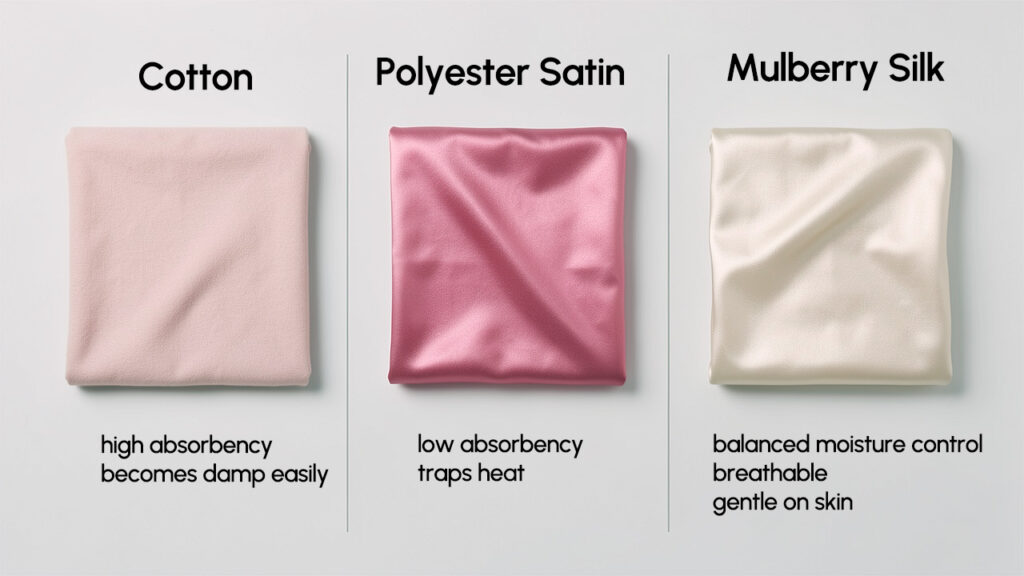
Other fabrics hardly absorb sweat at all. Sweat stays on your skin, creating a sticky, suffocating sensation. Your body works harder to cool down, but the heat can’t escape easily. The hotter you get, the more you sweat. This is common with polyester and many synthetic materials.
The Key Takeaway: Balance Is Everything
The goal isn’t “the more sweat it absorbs, the better.” The ideal sleepwear should gently take in moisture from your skin, stay breathable, allow sweat to evaporate quickly, and help regulate your body temperature. In other words, the cycle should be simple: absorb, release, stay comfortable.
Why Mulberry Silk Feels Almost Magical
This might sound too good to be true, but mulberry silk really does behave differently. It’s one of the few natural materials that balances absorption and evaporation in a way that works with your body. It gently absorbs moisture while allowing it to evaporate at a steady, natural pace.
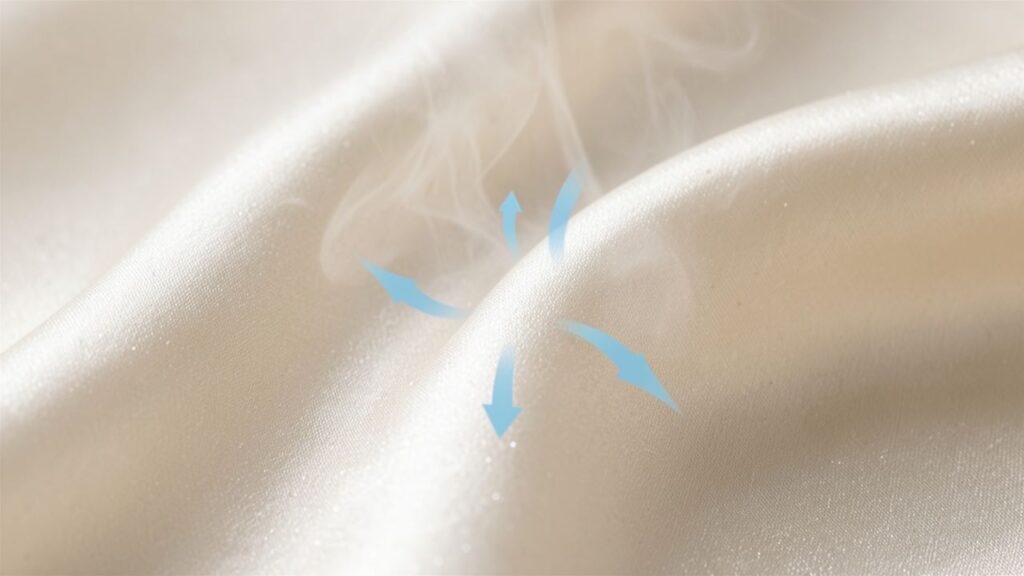
To understand why it feels so different, it helps to look at what makes silk special. Mulberry silk has several natural advantages that make it ideal for people who experience night sweats:
- Naturally temperature‑regulating — it helps keep you cool when you’re warm and warm when you’re cool.
- Breathable and lightweight — air moves through the fibers easily, preventing that heavy, suffocating feeling.
- Moisture‑balancing — it absorbs just enough moisture without becoming damp or sticky.
- Gentle on sensitive skin — the smooth, protein‑based fibers reduce friction and irritation.
- Hypoallergenic — resistant to dust mites and common allergens, which helps create a cleaner sleep environment.
- Quick‑drying — even if you sweat, the fabric releases moisture efficiently so it stays comfortable through the night.
There’s no sticky feeling and no heavy heat. By morning, your silk pajamas are dry. You might not even notice you sweated at all. And the best part is that you can sleep straight through the night without being woken by discomfort.
Ready to Experience the Difference for Yourself?
If you’ve never tried silk sleepwear before, this is the perfect moment to explore it. A single night in mulberry silk can feel surprisingly transformative — cooler, lighter, and far more comfortable than most people expect. Whether you struggle with night sweats or simply want a more soothing sleep routine, silk sleepwear is one of those small upgrades that can make your nights feel completely different.
✨If you’re curious to try it for yourself, you can explore our curated silk sleepwear collection here: Silk Sleepwear →
A Small Change That Makes a Big Difference
Better sleep often comes from removing small discomforts we barely notice, like the sleepwear we choose. If you tend to sweat at night, mulberry silk pajamas are absolutely worth trying. They offer a level of comfort that’s hard to go back from once you’ve experienced it.

Leave a Reply